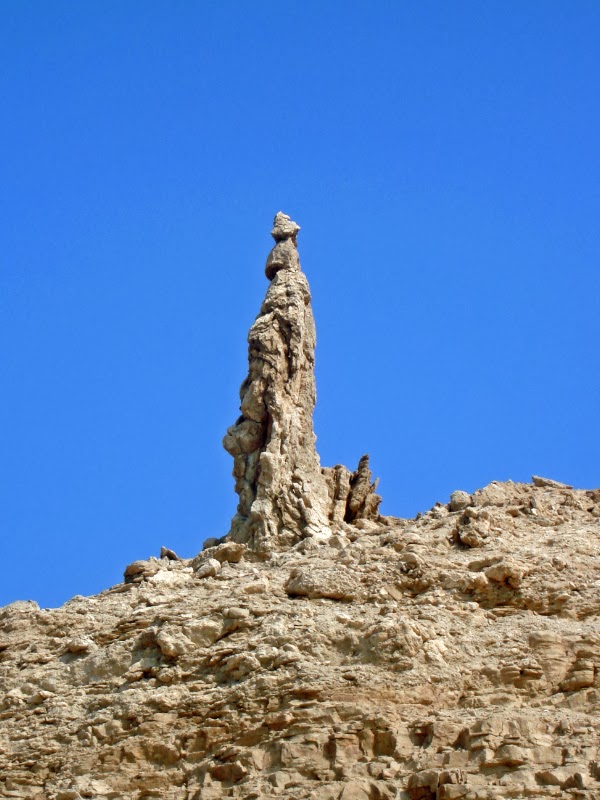
Showing posts with label Abraham. Show all posts

Sunday, March 2, 2014

Old Testament Lesson 9: God Will Provide Himself a Lamb

Today's lesson should provoke a number of questions pertaining to the Law of Sacrifice. Such a study will lead to a greater understanding and appreciation not only of what is required of us but of what has been given to us, by our Heavenly Father. That which is given and that which are required are inseparably bound as illustrated in Doctrine and Covenants 82:3,
"For of him unto whom much is given, much is required..."
Therein lies the basic foundation of any covenant. It requires effort on both sides, it requires sacrifice on both sides. Nowhere is this illustrated more clearly than in the story of Abraham and Isaac.

A study of the text of Genesis 22
v.1 "And it came to pass after these things..." After what things?  
Read summary of Genesis 21- "Sarah bears Isaac - He is circumcised - Promises to Abraham preserved through Isaac - Hagar and her son cast out of Abraham's household..."
It could also pertain to Abraham's life in general starting at his earlier life in Ur. 
So after all of that, what?

v.1-2 "God did tempt Abraham...and said, 'Take now thy son, thine only son Isaac, whom thou lovest, get thee into the land of Moriah; and offer him there for a burnt offering...' ."
Now we know that the word "tempt" has the same etymology or root as the verb "to temper". God did not tempt Abraham like some devil. He tempted him in the sense of testing him, trying his mettle, proving his character. 

I went to a science fair yesterday and was introduced to a machine that I had never heard of nor seen before. This machine sends vibrations into a tree to measure the tree's strength of resistance to them. This allows foresters to better know the strength and properties of that tree and thus better direct it to its most suited purpose, eg house beam, table leg or furniture peg. In trying to explain the concept to the kids I joked that if I hooked them up to the machine the vibrations going through their bodies might tell us their true characters and strengths and allow me to give them chores at home that might better suit each one of them! Well in some ways this is what God is doing to Abraham and he does to us too. He sends us things in our life or requires things of us that can shake us to our very centre but that can reveal who we are and what our strengths and weaknesses are. Now, do you think God doesn't already know our strengths and weaknesses? So why do we go through all of this testing and proving? And in particular, why does God put Abraham through this heart-wrenching experience?

In an address given on 13th August 1996,  at BYU, Elder M Russell Ballard related this story in answer to that question:
"Brother Truman G. Madsen tells about a visit he made to Israel with President Hugh B. Brown, an Apostle of the Lord who served as both Second and First Counselor in the First Presidency. In a valley known as Hebron, where tradition has it that the tomb of Father Abraham is located, Brother Madsen asked President Brown, “What are the blessings of Abraham, Isaac, and Jacob?” After a short moment of thought, President Brown answered, “Posterity.”
Brother Madsen writes: “I almost burst out, ‘Why, then, was Abraham commanded to go to Mount Moriah and offer his only hope of posterity?’
“It was clear that [President Brown], nearly ninety, had thought and prayed and wept over that question before. He finally said, ‘Abraham needed to learn something about Abraham’”" "The Law of Sacrifice" Ensign, Oct 1998
I find that fascinating. Abraham must be somewhere around 115 yrs old or more at this point and yet he is still learning more about himself and his strengths and his faith and his character. When I consider this and then consider my own age and how I have handled my small "vibrations" in life, with the odd grumble and murmuring or complaint and more than a little impatience, I feel very humbled. It makes me feel like I have so much still to learn.
How much testing will be done on us? Abraham records that we will be tested to see if we will do "all things whatsoever the Lord God shall command them" Abraham 3:26

How does Abraham feel about human sacrifice? Abraham 1:11-12
Put yourself in Abraham's shoes (sandals?). You might feel that you have been through every possible test and trial known to man. Your testimony and faith in your God finds one it's earliest forms with a miraculous escape from human sacrifice. And now, 100 yrs later, as you feel your life has attained that which it should and the end is in sight, retirement seems like a cozy option, you feel like you know your God and He knows you, suddenly the very roots of your faith are subjected to a request from your life-long God to return to that most hateful of all practices - human sacrifice. 
How would you react?

By all accounts and on multiple levels this should turn Abraham's world completely on its head.

v.3 But the only reaction we know is that he rose early, cut the wood, saddled the ass, got his servants and Isaac ready and left. He just set about doing what he had been commanded. NO questions that we are aware of. 
Do we have any hints as to Abraham's inner thoughts or feelings? "Rose early" seems to suggest he wasn't lingering or dallying or waiting to see if there was another command coming that might be different. He didn't question what he had heard. He didn't "accidentally" forget anything. He prepared everything and went. As you ponder that, consider the words of Spencer W. Kimball
"How often do Church members arise early in the morning to do the will of the Lord? How often do we say, 'Yes, I will have home evening with my family, but the children are so young now; I will start when they are older'? How often do we say, 'Yes, I will obey the commandment to store food and to help others, but just now I have neither the time nor the money to spare; I will obey later'? Oh, foolish people! While we procrastinate, the harvest will be over and we will not be saved. Now is the time to follow Abraham's example; now is the time to repent; now is the time for prompt obedience to God's will." "The Example of Abraham" Ensign, June 1975
So what was Abraham thinking, where did his faith rest? Read Hebrews 11:17-19 
It would appear, according to Paul, that Abraham was trusting in God's powers of raising from the dead! Now I find that fascinating. If I was to put myself in Abraham's position, having experienced what he experienced, I would think that I would have been more likely to believe that Isaac would be saved BEFORE it got to the point of being sacrificed. I mean I could even see myself believing it might go all the way to the knife being raised above Isaac on the altar. After all wasn't it at that point that Abraham was saved earlier in his life? But instead, Abraham's point of faith was that God could raise Isaac from the dead. Why? What experience or teaching had Abraham been given that would make this the focal point of his faith? see JST Gen. 15:9-12 Here the Lord instructs Abraham not to worry, even death cannot stop the Lord's purposes or promises. He can conquer death.
And so with faith in Christ's promises and power, Abraham rose early without any apparent physical hesitation to do "all things whatsoever" that he was commanded to.

v.4 "on the third day" I think this really emphasizes the test going on for Abraham internally. Three days of conversing, three days of thinking, three days of knowing what was up ahead, three days of opportunity to turn back. And still Abraham continued on.
v.5 "Abide ye here" No one else could be a part of this. This was holy, sacred and personal.
v.6 "Abraham took the wood of the burnt offering and laid it upon Isaac his son...and they went both of them together." We don't know definitively how old Isaac was, but he was strong enough to carry the wood that was to be used to burn him. That's a sizable load of wood. That would suggest Isaac must have been at least in his mid teens. The next chapter tells us that Sarah died aged 127. That puts a high end estimate of Isaac's age at the time of this sacrifice around 37. So it seems Isaac must have been somewhere between around 15 and 37 yrs old when his father took him to be sacrificed.
v.7 "Where is the lamb for a burnt offering?" Where indeed is the lamb - eventually we learn it was a ram with its head in a thicket but Isaac apparently knows nothing of his Father's plan at this point. 
v.8 "God will provide himself a lamb" or "God will provide himself - a lamb"
If this is Abraham's test why should God provide a lamb? Surely the law of sacrifice requires Abraham to give something. Whose sacrifice is this?
What did God provide Abraham in this story? see v.13 it was not a lamb but a ram. I wonder if the point of this verse has been lost and that in fact Isaac was being taught of the foreshadowing that his sacrifice would point to? I wonder if, with that understanding, he took to the altar willingly, and possibly also with the faith that the power of God could raise him from the dead in similitude to Christ's resurrection. Certainly by the next verse, there appears to be no resistance from Isaac to being sacrificed.
v.9 "And they came to the place which God had told him of" Where are they? see v. 2 
The Moriah mountain range - runs within and without what we now know as Jerusalem. Abraham built an altar there, somewhere. What does that tell us? This was not an established temple site at this point. Obviously in the circumstances described here of Abraham building an altar and offering a sacrifice it has become a temple site but why do you think the Lord sent him to this site rather than a previously established temple site that Abraham was already using? 

"and bound Isaac his son" - this is a "lad" strong enough to carry the wood on which he would be burned. That must have been a large amount of wood and therefore Isaac must have been a strong lad. No matter his age - to be that strong and be bound by a man over 100 yrs old seems somewhat far-fetched and instead strongly suggests that Isaac allowed himself to be bound. Why would he do that? What do you think Isaac, learned about himself here? 

The Jewish people call this whole event the "akedah" or the "binding". How might their focus on this particular part of the story lend deeper meaning to the events we read in Genesis 22? In Abraham's personal life the key point of this event is that he showed his God that he was willing to sacrifice his son, to give that which he most loved and had worked hardest for. In essence he loved his God more than anything else. Of course Abraham did not actually sacrifice Isaac but merely demonstrated his willingness to. That was enough for the Lord. But this story was never really about Abraham, as much as it was about foreshadowing the sacrifice of the Saviour. And thus the focus on the binding is greatly significant. Isaac's apparent willingness to allow himself to be bound is a direct reflection on the Saviour's willingness to be bound according to the plan and direction of His Father. This willingness and obedience to His Father's plan is what made the Atonement possible. Both Father and Son had to be willing to sacrifice and herein lies the ultimate sacrifice. 
"For God so loved the world that He gave His Only Begotten Son..." John 3:16
Heavenly Father gave His Son to be sacrificed, to show us how much He loved us. In obedience to his Father, Christ also willingly allowed himself to be sacrificed because of his love for us. The law of sacrifice is to test and prove someone and to show the depth of their love and allow us in so doing, to get closer to Christ. But here the ultimate sacrifice was performed by God and his Divine Son Jesus Christ. What were they proving and who were they drawing close to by this sacrifice, this Atoning sacrifice, this "at one"-ment?

v.14 "Abraham called the name of that place Jehovah-jireh" There is a well-established tradition that the location for this sacrifice (that has come to be known as Mount Moriah) is located on the highly controversial and politically charged Temple Mount. This Mount is also within view of the traditional site of the Lord's final act in the process of his sacrifice - the crucifixion on Calvary (also called by some as Golgotha). While the Temple Mount is within the walls of Jerusalem, the traditional site of Christ's crucifixion is found just outside the old city walls. It is believed Jerusalem got its name when to honour both the righteous city of Salem and to honour the site of Abraham's sacrifice the Jireh and Salem were joined together to form the name Jerusalem that essentially means place from which peace is shown/taught/seen.

v.16-18 "because thou hast done this thing, and hast not withheld thy son, thine only son..."
Abraham's blessings are confirmed because he withheld nothing from God.

B.H Roberts the church historian and one of the Seventy wrote,
"when the voice of God came to him commanding him to kill he stood not quibbling or questioning with God, he manifested his readiness to sacrifice even his son unto God's commandment; but when it was clear that Abraham would not even withhold his son from God—when the test was completed, the trial passed, the ram in the thicket was provided, dragged out, and bound in thankfulness upon the altar to take the place of Isaac. How sweet must have been the communion of Abraham with God after that! What confidence must have been his in the presence of God even after that! And how grand the words that came from the lips of Jehovah must have appeared to him, saying: "Because thou hast done this thing, and hast not withheld thy son, thine only son, in blessing I will bless thee, and in multiplying I will multiply thy seed as the stars of heaven, and as the sand which is upon the sea shore; and thy seed shall possess the gate of his enemies; and in thy seed shall all the nations of the earth be blessed; because thou hast obeyed my voice." Oh! my friends, God indeed calls, nay, demands, sacrifice; but God is able to reward men for their sacrifices, even to the uttermost. You need not doubt it. From that day on, what blessing is there in heaven that Abraham cannot command? What power in the old patriarch now and forever! Marvel you that it is written here in the Doctrine and Covenants that Abraham hath passed by the angels, and is no more an angel, nor a servant, but one of the Gods in the council of the Father? He had the strength and power of it in him, because he had made the sacrifice. (Brian H. Stuy Collected Discourses, 5 vols.)

Doctrine and Covenants 101:4 says that "the saints must be tried, even as Abraham was..." What does that even mean? For further study of this principle, read the lesson notes on the Church History Course Lesson 27
John Taylor once quoted Joseph Smith as saying, 
"'You have all kinds of trials to pas through, and it is quite as necessary for you to be tried even as Abraham, and other men of God,' and, said he, 'God will feel after you, he will take hold of you and wrench your very heartstrings, and if you cannot stand it you will not be fit for an inheritance in the Kingdom of God.'" (Journal of Discourses XIV, 197)

President Kimball said: 
"If we would seek the blessings Abraham sought, we could also receive such revelation, covenants, promises, and eternal rewards as Abraham received.... Abraham sought for his appointment to the priesthood. He did not wait for God to come to him; he sought diligently through prayer and obedient living to learn the will of God." (Ensign, June 1975, p.7)

From our study of Abraham over the last few weeks one thing that sets him apart was his personal inner drive to seek after righteousness. This is not a man who waited for blessings, who waited for time to teach him the things he needed to learn. He went out and sought after them. He actively looked for and found the Lord. Abraham was not just active in the gospel, he was proactive.

Isaac as a type of Christ
  • Both were born under miraculous circumstances
  • Isaac and Christ were both beloved and only begotten. Isaac was beloved and the only begotten of Abraham through Sarah.
  • Both entered the area of Jerusalem with an ass
  • Both carried the wood upon which they were to be sacrificed
  • Both experiences endured a period of three days
  • Both sacrifices were offered on mountains/hilltops in the Moriah mountain range, in and around Jerusalem.
  • Both willingly offered themselves to be sacrificed and were subservient to the will of the father.
  • Both sons were resurrected or returned to their fathers on the third day. Isaac was as good as dead to his father who fully expected to sacrifice his son. On the third day God provided another sacrifice and Isaac was restored to his father.
Isaac also typifies us. As he was saved from the suffering, so we too are saved from the suffering through the Lord's Atoning sacrifice. 

Saturday, February 22, 2014

Old Testament Lesson 8: Living Righteously in a Wicked World

Abraham's Chronology and Travels:
Abraham moved around a lot and led a pretty nomadic lifestyle. To bring us up to date with today's lesson I have compiled a brief chronology of Abraham's travels. I do believe there is much to be learned from a deeper study of the geography of these stories but we will not have time to go into too much detail this week. Nevertheless, this short chronology should help us to get a better idea of where Abraham has been and what he has been doing, up until the point when we reconnect with him in this week's lesson.

1. Born in Ur in land of Chaldeans
  • There is a famine and idolatry throughout the land
  • Abraham's brother Haran dies
  • Abraham marries Sarai
2. Moves to land they called Haran after his brother, who died in Ur (to escape idolatry and seek blessings) Abr. 1:1-2; 2:3
  • Abraham's wife Sarai, his nephew Lot (Haran's son) and his wife, and Abraham's father follow him.
  • Abraham's father returns to his idol worship and eventually dies in Haran, 205 yrs old.
3. 62/75 yrs old - moves to the land of Canaan (promised to be "an everlasting possession" to his seed). There appears to be some discrepancy between Genesis and the Book of Abraham account as to Abraham's age when he left Haran.
  • Takes his wife Sarai, Lot and his family, and the converts from Haran
  • Lived in tents, built an altar in Jershon to pray for his family in the famine.
4. Moved to Shechem (Sechem) in the plains of Moreh. Built an altar unto the Lord. "Unto thy seed will I give this land".
Shechem becomes a very significant place to the children of Israel. It is here that Jacob also returns to settle and digs a well. Here Joseph goes to find his brothers and just beyond here he is sold into slavery. Is it any wonder that his request before he dies in Egypt many years later is to be buried at Shechem. It is here too that Joshua gathers the returning tribes and recommits them to the covenants of the Lord in their promised land. The same promises and promised land as Abraham received in Shechem generations before. And here that Joshua buries the bones of the prophet Joseph.
5. Moved to mountain between Bethel (House of God) and Hai (Heap of Ruins). Built another altar unto the Lord.
  • Continues south. Famine continues.
6. Moves to Egypt (to avoid the famine)
  • Teaches Egyptians using astronomy and gospel teachings 
  • Pharoah tries to take Sarai to wife understanding her to only be Abraham's sister
  • Pharoah gives Sarai back and gives Abraham more wealth and asks him to leave Egypt.
7. Moves back to land of Canaan, between Bethel and Hai
  • Made offerings at the altar and called upon the Lord again.
  • Returned with more wealth and more people including an Egyptian handmaiden called Hagar
  • Lot and his family still with Abraham
At this point Abraham is no older than 86 yrs old.

Dealing with Strife  
Genesis 13
Firstly, let's understand the relationship between Lot and Abraham. Abraham is Lot's uncle (Lot's father was Abraham's brother Haran, who died in Ur). Lot has followed with Abraham from Ur to Haran onto Canaan and down into Egypt and back again into Canaan. By the time Lot is introduced to the story, he is already married. They have probably journeyed and lived together at least 20 years. They are close and Lot has greatly benefited from being in Abraham's presence.
 
v.2 and v.5 Abraham is rich in cattle, silver and gold. Lot has flocks and herds and tents. Both have done well for themselves although you feel that Lot's wealth is likely somewhat as a result of his association with Abraham.
v.6-7 What was the initial problem? What then highlighted the problem? What could potentially make this problem very serious?
The initial problem was that they had been blessed with so much that the area they were living could no longer support all of their herds and all of their people. This was highlighted when the herdmen of Abraham and the herdmen of Lot had a "strife" between them. This might not seem like a big deal initially but the seriousness is found in the final sentence of verse 7: "and the Canaanite and the Perizzite dwelled then in the land". If they do not find a solution to this internal strife, it will invite strife from other groups who occupied the land and who would desire their cattle and herds and land. It was very important that this issue is solved quickly before they paint a big target on their backs.
v.8-12 Who seems to be the proactive party in trying to resolve this? What does this suggest about Abraham? What is Abraham's solution? As patriarch of the family (according to custom and tradition), and with the promises of the Lord established with him, Abraham has every right to pick where he chooses to settle, first. Instead he offers the first pick to Lot. What can we learn from Abraham's approach?  
"It is Abraham who took the initiative and said unto Lot, 'Let there be no strife, I pray thee, between me and thee,...if thou wilt take the left hand, then I will go to the right; or if thou depart to the right hand, then I will go to the left.' (Genesis 13:7-9.) The complete, genuine willingness of Abraham to adjust to whatever Lot's decision was is the mark of a generosity of spirit of that remarkable patriarch." Neal A. Maxwell (That My Family Should Partake, pp92-93)
Lot chose what he viewed to be the most watered and most fertile land. He used his eyes as far as they could physically see. What did Lot miss? see v.12-13 
Meanwhile Abraham, who appears to have got the short end of the stick if you are looking at things with physical eyes, has his spiritual eyes opened. see v.14-18 
Notice both lifted up their eyes to see but one had the guidance of the Lord and the other didn't. Why do you think Lot, who was a righteous man, did not have spiritual sight in this instance? What sins of omission deprive us of spiritual sight today?

Redemption of the righteous
Genesis 14:1-16
So Lot has pitched his tent towards Sodom (compare this to those that pitched their tents during King Benjamin's temple discourse in Mosiah 2:6), which seems to suggest that he had dealings in some part with the people of the city, maybe for trade. Certainly he looked toward the city with some positivity, maybe as some benefit to him. But this inability to fully separate from the wickedness of the world ends up impacting Lot and his family in devastating fashion.
The region had 5 cities: Sodom, Gomorrah, Admah, Bela (later called Zoar), and Zeboiim. Each city had its own king. They paid tribute to 4 other kings. But after 13 years they stopped paying this tribute and the 4 kings came to do battle with the 5 kings (including the King of Sodom). The 4 kings routed the 5 kings and as was the custom the victorious kings took their reward:Sodom was pillaged and looted and some of the locals were carried away captive. (see v.11-12)
Notice the difference between Genesis 13:12 and Genesis 14:12. For whatever logical or logistical reason, Lot is no longer on the edges of wickedness, he is living in it. How do you think this impacts him, his family, and especially his children?
v.14 Abraham could have done nothing and said it was Lot's own fault. Considering he is going to have to go up against 4 powerful kings and could be about to make some powerful enemies, you wouldn't blame him for not helping Lot. But he does help. Abraham's swift action is likely what saved his nephew.
Now consider this little bit of information "he armed his trained servants, born in his own house". The bible is full of little comments like that, they seem insignificant at first. But I am of the school of thought that believes scripture is the word of God (as far as it has been correctly translated) and each detail is in there for a reason. So when I read that Abraham armed his trained servants and that they were born in his own house it makes me ask why the Lord wanted me to know that detail. I'm not sure the answer in this instance but wonder if it might be that we should learn the great power and strength that can come from being untouched by the world. Lot, who chose to be part of that world is carried away captive as a result of his association with Sodom. But Abraham's trained servants who are unpolluted, untouched by anything other than what Abraham has taught them are strong enough not only to resist but defeat the pillaging kings and rescue Lot. They were brought up in righteousness, in Abraham's house from birth. Lot obviously found it difficult to live in the world and not be touched by it. Yet Abraham managed it. As our world becomes increasingly more wicked how do we live in the world without being touched by it as Lot was? Can we? Can we live as Abraham lived?
v.16 what is the result of Abraham's intervention? Lot and his family and all his goods are restored. This is full restoration of blessings
If we liken Abraham to Christ and Lot to us, what basic truth does this story teach us? 

The Lesson of the Two Kings
Genesis 14:17-24
After this rescue Abraham is approached by two kings. What happens next tells you everything you need to know about Abraham and the source of his confidence and strength.
Compare Genesis 14:17, 21-24 with Genesis 14:18-20.
After a victorious battle Abraham should be well within his rights to take the victor's spoils. Yet rather than taking spoils he gives of his own wealth to the King of Salem, Melchizedek. What is going on here? Consider these questions:
Why is Abraham not taking any of the victors spoils?
If he is not taking any, why does he insist that those local tribe leaders who helped him have their spoils?
In giving tithes what do you think Abraham is acknowledging?
It seems to me that Abraham was not interested in wealth, he had lots of it but he obviously was not interested in gathering it. He did not have a love for it.
v. 22-23  Accepting the spoils of war (which were likely originally stolen from Sodom and the other cities looted) would put Abraham in debt to the King of Sodom, who represents the wicked world. Abraham makes it clear that he does not want any association with the King of Sodom or therefore symbolically, the wickedness of the world or the leader of this wicked world, Satan.
However, Abraham does not force his beliefs on others and thus insists that the other tribal leaders get their spoils.
In giving his tithes to Melchizedek, Abraham is, in essence, offering thanks to the Lord. He is showing recognition that this victory was not his but the Lord's. Melchizedek (literally translated "king of righteousness") was the king of Salem (later called Jerusalem) and he was the officiating great high priest of the day and therefore both the representative and symbol of Christ. Thus the tithes figuratively become the spoils of victory and Abraham gives the spoils to the truly victorious King of Kings via Melchizedek.

The Parable of Sodom and Lot
Genesis 19:1-29
Many people suggest that much of the bible stories in the Old Testament are more parabolic than biographical. Job is a prime example of an Old Testament character that many say did not really live but whose story serves merely as a parable. I am more of the opinion that most of these characters did live AND that their lives served as parables to us. One such story is the story of the city of Sodom and Lot, it's most famous citizen. As you study it you will find a story rich in drama but also in context and meaning to us today. For that reason I have titled this section of scripture study, the Parable of Sodom and Lot.

v.1-2 When Lot first made his move away from Abraham he "pitched his tent toward Sodom". When we last saw him we are told that he "dwelt in Sodom" and now we are told he sat "in the gate of Sodom".  In ancient times to suggest someone "sat in the gate of the city" was akin to indicating that they held a civic position of authority. Lot has become firmly entrenched in Sodom and yet Peter tells us that Lot was a righteous man (cf 2 Peter 2:7-8). Peter's commentary suggests that Lot had to listen to unlawful deeds every day and they "vexed his righteous soul". This would lend credence to the idea that Lot sat in the gate of the city as a judge of Sodom. The obvious contrast in Lot is that he himself is righteous and yet he seems drawn to the wicked city. What do you think attracted Lot to Sodom?

Of course for all Lot's tolerance of this wicked city, things were about to change very quickly. Three angelic visitors are sent to rescue Lot from Sodom that night. Based on the Joseph Smith Translation of Genesis 18 and 19 we learn that these three angels were holy men (see footnote a. Genesis 18:22; 19:1,12).
Another sign of Lot's righteousness is that he recognizes these holy messengers, he warns them of the city's wickedness and hurries them into the protection of his home where he cleans and feeds them and protects them from a lusting and angry mob. When it is obvious to the Lord's messengers that Lot is truly converted, they step forward and take over, striking the mob with blindness (as they always could have) and start the process of evacuating Lot and his family from the city that is about to be destroyed because of its wickedness. What sins was Sodom guilty of? (cf Ezekiel 16:49-50) How do these sins compare to the sins of the world today?
v.12 is a great opportunity for Lot to save anyone and everyone he can. I have often thought of this as one of the great missionary scriptures. "For it becometh every man that hath been warned to warn his neighbour". Lot is being asked for referrals! Bring them out of this place! Gather them to Zion!
v.14 like the good member missionary Lot is, he goes to his children and their husbands. But they dont take him seriously. A likely modern version of their response is "Dad, its the middle of the night. Are you mad? Quit getting so excitable - take your pills and just go back to bed. Nothing's going to happen to the city. Haha! Goodnight Dad!" (cf 1Nephi 2:11-13) This was a common reaction in the old world and in the latter days)
Why do you think they did not listen to Lot or take him seriously in spiritual matters?
v.15 it is now the next morning and no one has evacuated. The messengers tell Lot to hurry up and take his wife and two daughters still at home, and leave the city immediately. Why? "lest thou be consumed in the iniquity of the city".
v.16 why did Lot "linger"? We know he is righteous. We know he believes the warnings. Why does he linger?  How much effort have we made in warning our families and friends, our loved ones? When the time comes will we feel responsible for not having warned them enough? The holy messengers have to drag Lot and his wife and two daughters away; "the Lord being merciful unto him". They are therefore separated from the wicked, being left outside the city. Notice in contrast Abraham had always kept himself separate from the wicked.
v.17 having separated Lot and his family the holy messengers give them four final instructions before leaving them.
  1. Escape for thy life
  2. Look not behind thee
  3. Neither stay thou in all the plain
  4. Escape to the mountain
Now I got so excited when I read this, I actually stopped my daughter from watching TV so that I could explain it to her. I love the scriptures they are so full, if you just search them! So consider this:

Sodom represents the world and Lot represents us.
We live in a world that is wicked. And we are told that at some point there will be a separation - the wheat from the tares; the righteous from the wicked. Before that happens though we are told that we must warn others (see v.12).
Some family or friends will accept the warnings, others wont. Some may even think you are a little crazy. (see v.14).
Whether or not they join you, you must separate yourself from the wickedness of the world, even if that means you lose loved ones in your life. (see v.15). Some of us may linger a bit in leaving behind those people and those things we love. Some may find it harder than others to do this. But the Lord wants us to know the time is at hand. Moreover the Lord, in his mercy will grab the righteous by the hand and drag us away if he has to. (see v. 16)
At some point we all need to make this decision to separate from the world (it may happen at our baptism, it may happen later in life) but when we do act on this decision and have separated ourselves from the wickedness of the world the Lord gives us 4 further instructions:
  1. Eternal life is at stake! ("Escape for thy life")
  2. Do not long for or go back to the ways of the world ("Look not behind thee")
  3. Do not even associate with it or get close to it ("Neither stay thou in all the plain")
  4. Go to the temple and partake of the saving ordinances and covenants ("escape to the mountain lest thou be consumed")
So the message this week to all that are "righteous" (have accepted the Lord and his gospel in their lives) is to remember that your are fighting for your eternal life. If you go back to your former ways or the ways of the world, if you even walk on the edge, sit on the fence, or peer over the city walls you will be consumed and destroyed with the wicked. The only way to guarantee survival is to escape from it all and become worthy of and partake in the saving ordinances and covenants of the temple. Therein lies eternal life.

Now read on:
v.18-20 What? Lot didn't want to go to the mountain? He didn't go? He delayed it again?
v.21-22 The Lord in his patience and mercy gives Lot time and allows him to stop instead in a smaller city that he promises not to destroy immediately. Lot understood he needed to escape. Lot got out of the wicked world but he is still not prepared to go to the temple. Instead he asks for more time. The Lord is merciful and gives Lot more time.
v.26 However Lot's lingering seems to have taken deeper root in his wife and she is unable to grasp even the concept of eternal life and "looked back", presumably returning to the wicked world. This return is a step too far. The Lord can, for a short season, tolerate us taking a bit longer to grasp principles and get to the temple but returning to our wicked ways or our former life will not be tolerated. Consider this statement from the Lord,
"No man having put his hand to the plough, and looking back, is fit for the kingdom of God" Luke 9:57-62
And thus, Lot's wife perishes in the destruction. The Lord was quite specific in wanting us to remember this particular tragic choice. When speaking of the last days to the Pharisees he says, "Remember Lot's wife." (Luke 17:32). And in the latter-days he repeated the instruction (cf Doctrine and Covenants 133:14-15). Speaking of Lot's wife, Elder Neal A. Maxwell said,
"Let us once and for all establish our residence in Zion and give up the summer cottage in Babylon" ("A Wonderful Flood of Light", BYU Devotional 26 March 1989)
On a lighter note, when I hear this story I am always reminded of the story from Thomas S Monson who related an experience of one youth sunday school teacher,
"The Sunday School teacher was describing how Lot's wife looked back and turned into a pillar of salt. Little Johnny was much interested. 'My mother looked back once while she was driving,' he explained, 'and she turned into a telephone pole!' " (Favorite Quotations from the Collection of Thomas S. Monson [Salt Lake City: Deseret Book Co., 1985], 23
v.27-28 Meanwhile where is Abraham?  In the place where he stood before the Lord and where he can also see all the cities of the plain. It can be only one place. Abraham is in the mountain. Of course we would not expect anything less of Abraham. But it has more significance.
v.29 This final summary of the story of Sodom and Lot has an interesting turn of phrase,
 "It came to pass that when God destroyed the cities of the plain, that God remembered Abraham and sent Lot out of the midst of the overthrow." 
Why did God set his hand to rescuing Lot? He remembered Abraham. On the face of it that seems to be a bit illogical. Lot was saved because Abraham was righteous and asked for Lot to be saved? Surely we cant rely on someone else to get us to heaven and partake of eternal life? Well in a way we can (cf Alma 10:22-23 the prayers of the righteous) but in a way, ultimately, no we cant...unless it is the Saviour.

And so the parable extends with Abraham is a type/symbol of both 1. our premortal Father in Heaven and 2. the Saviour, Jesus Christ, who was the only one to keep himself unspotted from this world.
As our Father in Heaven, he leads Lot (us) and guides Lot (us). While Lot is with him he protects Lot (us) and blesses Lot (us). When it comes time to separate from him and come to this mortal fallen world (see Genesis 13:10  "even as the garden of the Lord" -the plains where Lot first pitches his tent are compared to the Garden of Eden which Adam and Eve leave to enter the dark and dreary world) We are instructed to live in the world but not be of it. We must work to be an influence on the world rather than allow the world to influence us.
At some point holy messengers of God will give us a chance to set ourselves apart from the world, to be baptized and converted. It is not an easy process. We may lose loved ones on the way. We may take longer than is ideal but the ultimate goal is to gather to the temple and partake of the saving ordinances and covenants of the temple. And God in his mercy has provided a Saviour to plead on our behalf, to atone for our shortcomings as long as we never return to the wicked ways of the world. As if this was not enough consider the meaning of their names. Abraham is Father of a Multitude. Lot is a Covering. It would seem Lot's life was meant not only as a symbol of us but also as a reminder of the great covering sacrifice and Atonement that is necessary to our salvation.

We are instructed to gather to the temple. The temples are our refuge from destruction and our sanctuary of peace. But the Lord is aware that we are imperfect and is aware how slow we are to listen and how often we linger in error's gloomy way. He is merciful. He has provided a Saviour who pleads for us and whose sacrifice covers our sins of commission and our sins of omission. But we must never look back. Remember Lot and Remember Lot's wife.

Wednesday, February 12, 2014

Old Testament Lesson 7: The Abrahamic Covenant

Context:
If you have a look at the map here you will notice a portion highlighted in green. It is here that we find the greatest concentration of conflict in the world currently. One of the core reasons for this is that many countries and people in the region believe that Israel stole its land from the Palestinians. These countries are agitating and urging others to fight for the Palestinians to take back the land they consider to be rightfully theirs. When we sit here in our comfortable homes and consider the Old Testament, it can sometimes be hard to fathom how these old stories impact our lives today. The truth is much of today's wars and political conflicts find their root in one particular aspect of an ancient covenant where God is said to have promised one particular man one particular parcel of land - we have come to know that land today as Israel and the person that God covenanted with was Abraham.

Today we will study Abraham and his covenant with the Lord. It is a covenant that has been largely forgotten by the world but was prophesied to be remembered in the latter-days. Malachi 4:5-6 and Doctrine and Covenants 2 both are widely and correctly interpreted as reflecting the great temple work we would do for our individual fathers or ancestors. But there is more. S. Michael Wilcox said,
"There are multiple meanings to Malachi’s prophecy, one of which centers on temple work for our individual fathers, or ancestors, who await in the spirit world."
"However, this text also refers to the promises made to the great patriarchs. In section 27 the Lord speaks of partaking of the sacrament with a number of ancient prophets—with Elijah “and also with Joseph and Jacob, and Isaac and Abraham, your fathers, by whom the promises remain” (D&C 27:10). In the latter days, the hearts of the seed of Abraham will turn to their patriarchal fathers and remember the promises made to them. They will desire the blessings of those promises as well as desire to fulfill the responsibilities associated with those promises." The Abrahamic Covenant, Ensign Jan 1998
Prior to Abraham:
In our first 6 weeks of Old Testament Study we have gone on a whirlwind tour of the first 1600-1700 years of the earth's existence from Adam down to Noah  and the Tower of Babel (not including the periods of time taken during the 7 creation periods). Today we are fast forwarding again but only by a couple of hundred years or so from the events of the Tower of Babel. In contrast to the last six weeks speeding through time, we will now spend the next 4 weeks studying just one man - Abraham. Having studied Adam and Noah, and grown to appreciate the incredible contribution they made to man's existence, why do you think there is so much emphasis placed on the life of Abraham?

Genesis 11:10-30
On our way down through the 10 generations between Noah and Abraham we pass Noah's son Shem. From Shem comes the origination of the term "Semitic" (Shemites) which is now recognized as one of the titles of the Jewish people. There is also some evidence that Shem may have been the mighty high priest, Melchizedek, to whom Abraham paid tithes.

Shem's great-grandson was called Eber (or "Heber"). According to Jewish tradition Eber refused to help build the Tower of Babel and was thus allowed by God to preserve their original pure language. This language, according to Jewish tradition was named after Eber (or Heber) and is what we call "Hebrew" today.

Eber's son, Peleg is forever identified with the time when the earth was divided. It is unclear what kind of division. Many believe the earth and the original single land mass was physically "divided" into the continents we know today by the flood that occurred some decades (maybe a century) before Peleg was born while some believe that it happened after Peleg was born or maybe was an ongoing process in those decades in between and during the flood and Peleg's birth (Genesis 10:32). Others believe the earth was "divided" socially into tribes and nations and languages  when the people were dispersed immediately after the Tower of Babel when Peleg was a young man (Genesis 10:5; 11:9). Others still believe that the earth was "divided" when the nations began fighting shortly after the Tower of Babel's events. Either way and in all ways, it seems Peleg was born into a period of great division and it is appropriate that his name in Hebrew has the definition of "division".

Peleg's grandson Serug is credited with being one of the first in Shem's line to turn to idol worship. By now he had settled in the city of Ur, by the Euphrates river in lower Mesopotamia (believed by some to be modern-day Southern Iraq, and by others to be in Northern Syria/Southern Turkey).

By the time we reach Serug's grandson, Terah, the family line is very strongly entrenched in idol worship and have distorted the teachings of the early patriarchs and prophets and are considered wicked. There are some ancient texts that suggest Terah was a high-ranking priest in this idol-worshipping sect and that he may even have had a business selling idols. Terah is reported to have had 3 sons. One of these sons he named Abram, later known as Abraham (Genesis 17:5; 1 Chronicles 1:27).

Please recognize that even though we have traveled through a number of generations, when Abraham is born, Noah is still alive, Shem is still alive and all of the previously mentioned generations of Abraham were still alive. From the ancient texts we do have, they seem to have spread out across the lands and may not have been in close contact with each other, nevertheless they were all still living at the time of Abraham's birth. It is during this time however that the lifespan of the patriarchs seems to diminish greatly. Noah lived until he was 950 yrs old and Shem lived over 600 yrs but by the time Abraham was born (although Noah and Shem were both still alive) the more average lifespan appeared to be more around 170-200yrs.

Abraham: 
Abraham's story should serve as a great example and encouragement to all those in broken homes who suffer from abuse or depression or a lack of fulfillment and who seek happiness. The very first thing we learn of Abraham is that he had figured out his home was not a happy place and that he needed to get out of that harmful situation. Somehow he figured out there was more to life than the abuse and wickedness and corruptness he was raised in.

Abraham 1:2-4 spiritual departure from wicked traditions
What sets Abraham apart from his father here?
Look for the verbs that describe Abraham's actions: 'finding', 'sought', 'desiring', 'desiring', and 'sought'.
Do you get the impression that Abraham was idly wishing for these things? How bad do you think Abraham wanted this?
What were the results of Abraham actively finding, seeking and desiring these things?
"I became a rightful heir, a High Priest, holding the right belonging to the fathers"
What else did Abraham seek for in verse 4?
"I sought for mine appointment unto the Priesthood according to the appointment of God unto the fathers concerning the seed"
Abraham directly sought out this promise and blessing and covenant, the same covenant that had been promised to Adam and to Noah. He knew of it and sought to obtain it for himself.

Abraham 1:1; 2:1-6 physical departure from wicked traditions, departure from physical death (his brother Haran) - symbolizing possible departure from spiritual death also? Interesting to see he took his father with him, or his father followed after him. Does this suggest his father repented and followed Abraham spiritually also?  The fact that his father "turned again unto his idolatry" (see v.5) suggests this was indeed the case.
Note also his father was likely humbled by the Lord with the famine and the death of his son (v.1) but then returned to his wicked ways once his comfort levels returned. How often do we remember our God in times of trials only to give him up in pursuit of other things once we are over the trials and times are good again? Eg. do we become more consistent and sincere in prayer and fasting when times are tough only to return to less consistent and less heartfelt ways afterwards?

Obviously, Abraham had not moved far away enough from the traditions of his fathers. In fact they followed him. Thus the Lord commanded Abraham to move further away. What kind of bad traditions/bad habits follow us in our life? Do we do enough to remove ourselves from those things or to leave those things behind in our lives? The overwhelming message from God and Abraham when faced with wickedness, abuse and corruption is "get out, get out, get out!"

The Abrahamic Covenant (Blessings and responsibilities):
It is important to remember that any promise of blessing from the Lord carries with it an instruction of responsibility. As the Lord blesses Abraham, he is also binding him to certain responsibilities. And so it is with us and the everlasting covenant, patriarchal blessings and so forth. Likewise, as we carry out certain responsibilities we bind the Lord to deliver certain blessings (cf Doctrine and Covenants 82:10).

As we study Abraham's covenant with the Lord, consider using this same method to review your own personal patriarchal blessing. In highlighting the relevance of certain responsibilities with specific blessings, I am sure you will find a new level of clarity in understanding and appreciation of this personal blessing to you from the Lord.

Part 1(Abraham 2, Genesis 12 - Abraham is 75 yrs old)
We do not know what Abraham's prayer was about in Abraham 2 that led to the appearance described both in Abraham 2 and Genesis 12 but once again he is seeking and looking for guidance and answers. As Oliver Cowdery noted in his footnotes at the end of the Joseph Smith History portion of the Pearl of Great Price, the Lord is,
"ever-willing to answer the consistent prayer of the humble". 
And indeed in verse 6 of Abraham 2 we see the Lord answers Abraham's prayer and proceeds to instruct him and bless him.

Instructions:                                                     
Genesis 12:1 Leave thy country, thy people, thy family (give it all up, leave all the wicked influences behind)
Blessings:
I will give thee a land and a people and family (receive it all back)
Abraham 2:6; Genesis 12:1"a strange land which I will give unto thy seed after thee for an everlasting possession". Consider how much bloodshed has centred around this parcel of land. Why did the Lord apportion this land to Abraham and his children/descendants/heirs? What is so special about it? Why did others lose the right to the land or why could they not share it?
Abraham 2:9; Genesis 12:2 "I will make of thee a great nation"
Abraham 2:9; Genesis 12:2 "Bless thee above measure"
Abraham 2:9; Genesis 12:2 "Make thy name great among all nations" (consider this today in relation to the 3 major religions of the world Christianity, Islam and Judaism - all today revere him as a great prophet, Father Abraham. A rare commonality between warring religions today)
Abraham 2:9; Genesis 12:2 "Thou shalt be a blessing unto thy seed after thee"
Abraham 2:9 Thy seed "shall bear this ministry and Priesthood"
Abraham 2:10 those who receive the gospel "shall be called after thy name, shall be accounted thy seed, shall rise up and bless thee as their father."
Abraham 2:11; Genesis 12 :3 Lord will "bless them that bless" and "curse them that curse" Abraham.
Abraham 2:11; Genesis 12:3 "in thy seed...shall all the families of the earth be blessed with the blessings of the Gospel" (salvation and eternal life).

Instructions to seed who wish to be part of this covenant and recipient of the blessings:
Abraham 2:6 Thy seed must "hearken unto my voice"
Abraham 2:9 Thy seed must "bear this ministry and Priesthood unto all nations"

Now I'm no contractual expert but it seems pretty clear that this is a very one-sided contract. Compare the number of instructions to the number of blessings Abraham received. It reminds me of the great talk King Benjamin gave at the General Conference of c.124 BC (cf Mosiah 2:19-24). The Lord seeks to bless us immeasurably at every possible opportunity.

Notice also the eternal parallels:
A land of promise - A celestial kingdom (Doctrine and Covenants 88:17-20)
A great posterity - Eternal marriage and increase (Doctrine and Covenants 132:19-22)
Gospel blessings and priesthood - Exaltation and eternal life (Doctrine and Covenants 132:23-24)
Now consider the questions we asked earlier regarding why Abraham had been promised the specific parcel of land and why he could not share it with just anyone. But this time consider them within the context of the land being a symbol of the celestial kingdom. Why is the celestial kingdom saved for only a chosen few who are called children of Christ? What is so special about the promised land of the celestial kingdom? How do others lose their right to it?

Part 2 (Genesis 17: 1-9 - Abraham is now 99 yrs old)
There are two ways to view this repetition of the covenant.
Either this was the first formal application of the covenant or this was a renewal of the covenant. Potentially the promise of blessings in Genesis 12 and Abraham 2 was just that - a promise of being able to partake of the covenant in the future, much like we promise new members that they can partake of sacred covenants in the temple when they are ready. In that initial invitation Abraham is instructed to leave unholy places, essentially as preparation to receive this covenant.
Alternatively, Abraham partook of the covenant initially and is now renewing this covenant. The fact that the Lord gives Abraham a new token of the covenant suggest it may well have been a renewal and a reminder of the covenant already made. And that raises the question why? Why did the Lord feel the need to renew this covenant with Abraham 24 years later? What other covenants does the Lord have us renew and why?
But whether it be freshly undertaken or renewed, it is clear the Lord made great promises to Abraham as he did to Adam and to Noah and other of the great patriarchs, before and after Abraham.

Instructions when he was 99yrs old:
Genesis 17:1 "walk before me"
Genesis 17:1 "be thou perfect"
Blessings when he was 99 yrs old:
Genesis 17:1 "and be thou perfect" (not sure if this is an instruction or a blessing that comes from walking before God. It is possible the sentence structure is showing a cause and effect statement. Cause/action= walk before me, Effect/result= and be thou perfect or in other words the Lord may be saying if you walk before me you will become perfect or complete.)
Genesis 17:2 I will "multiply thee exceedingly" (remember Abraham has lived almost 25 years with this promise but is still childless with Sarah and just one son, Ishmael, with Hagar the handmaiden)
Genesis 17:4 "thou shalt be a father of many nations"
Genesis 17:6 "I will make thee exceeding fruitful"
Genesis 17:6 "I will make nations of thee"
Genesis 17:6 "Kings shall come out of thee"

Name change: The tradition of changing a name to signify or authenticate a covenant or promise is an ancient one that still exists day. Consider the marriage covenant today where a young woman signifies or authenticates that she is indeed in covenant with her husband by taking upon her the name of her husband. The scriptures are full of this marriage symbolism between the Lord and his people. He considers us his chosen people and in entering the covenant we take upon us his name.
In this particular covenant, the Lord gives Abraham a new name. Originally named Abram he is now told his new name with immediate effect will be Abraham. Many believe that changed the meaning from "Exalted Father" to "Father of Many" and is also indicated in our Bible Dictionary to mean this which would be highly indicative of the covenant blessings Abraham was promised. But there are a couple of other thoughts on this. Jeff Benner of the Ancient Hebrew Research Centre said,
"While many suggest that Abram means "exalted father" and Abraham means "father of a multitude", both names in fact mean exactly the same thing "father lifted up" or "exalted father". The beginning of both names is אב (AB) meaning "father". The "ram" in Abram is דם meaning "lifted", a parent root. The "raham" in Abraham is רהם also means "lifted"...It does not make much sense to change a name if the new name means the same thing. This is why many attempt to make a change in meaning. But, to understand the real meaning behind a name change is important for understanding why God changed his name and the names of others such as Jacob to Israel.
In Genesis chapters one and two we have the naming of all of creation. We find that Adam named Eve, his children and all of the animals, while God named the light, darkness, sky and land. From this we find something very interesting. Adam had authority over his wife, children and the animals, while God has authority over the light, darkness, sky and land. If you have authority over something, you have the right and responsibility to name it. Abram was named by his father Terah, the one who had authority over him. But, when Abram left his father's house and headed out on his own, God, who respected the authority of Terah previously, now takes the role of his authority and changes his name indicating a change in authority, not necessarily a change in character."http://www.ancient-hebrew.org/emagazine/004.html
Another alternative is to take the root form "Ab" meaning "father" and then "raham" that can be interpreted as mercy and compassion (see Hosea 1:6). Compassion is not quite strong enough for the literal meaning. Phrases such as tender mercy and deep compassion and unbreakable bond would be more appropriate for a true understanding of the word. Within that context, imagine what the Lord is saying to Abraham as he gives him this name and covenant.

I don't think we need to get caught up too much further in what his name actually did or didn't mean. Suffice it to say this was a highly personal and meaningful moment between the Lord and Abraham and both undertook the covenant in love, intent on honouring it. This process of receiving a new name and new tokens will be familiar to all faithful saints who undertake the new and everlasting covenant within the holy temple.
                                                                       
Heirs to the Covenant:
Genesis 17:7 "And I will establish my covenant between me and thee and thy seed after thee in their generations..."
The blessings promised to Abraham were also promised to his descendants. Elder Joseph Fielding Smith said,
“The great majority of those who become members of the Church are literal descendants of Abraham through Ephraim, son of Joseph. Those who are not literal descendants of Abraham and Israel must become such, and when they are baptized and confirmed they are grafted into the tree and are entitled to all the rights and privileges as heirs” (“How One May Become of the House of Israel,” Improvement Era, Oct. 1923, 1149)
Read also Galatians 3:7-9, 29
We who have taken upon us the name of Christ and been baptized by immersion to signify this are heirs to the covenant. So let's remind ourselves of the specific instructions for Abraham's descendants who wish to receive the blessings:
Instructions to Abraham's seed who wish to be part of this covenant and recipient of the blessings:
Abraham 2:6 Thy seed must "hearken unto my voice"
Abraham 2:9 Thy seed must "bear this ministry and Priesthood unto all nations"

S. Michael Wilcox spoke of this responsibility when he said,
"If a member of the church is to bless the world and thus fulfill the obligation inherent in the Abrahamic covenant, he or she must be aware of two attitudes that hinder the effective influencing of the world for righteousness; being of the world, or like it; and being above the world or aloof from others not yet part of the covenant...we must guard against them" 1989 Sperry Symposium on The Old Testament
These two attitudes are best illustrated by the children of Israel, throughout the Old Testament, who desired too often to become like the world and by the Pharisees, in the New Testament, who overcompensated for the children of Israel's desire by becoming too aloof with the world. We need to find a balance in the middle where we are in the world but not of it.
 
Read Abraham 2:15-16 I love these verses. It gives us another little insight into the kind of man Abraham was. He honored his covenant including his missionary work! He won souls and they followed him to the promised land. To be worthy of the great blessings of the Abrahamic covenant we too must share the gospel with others. In living this way, we too may be able to one day say "eternity was our covering and our rock and our salvation".

Saturday, January 11, 2014

Old Testament Lesson 2: Thou Wast Chosen Before Thou Wast Born

"Grand Universe" by Gary Tonge (click on picture to enlarge)
Take a minute to really look at and enjoy this picture.
What do you see? 
If you are like me then you will probably recognize the earth and the moon and the sun and the stars but not much else.


What does it inspire within you? How does it make you feel? Again if you are anything like me, you will probably feel a little awe-struck; maybe a little insignificant or overwhelmed by our nothingness; maybe somewhat mystified, amazed and inspired; and even a desire to learn more about this grand universe. 
Remember this is just a picture. 
Now imagine if you got to see all of this in person.
Abraham did. 
And much much more...in person...with God as his tour guide!
 
What we will study today is amazing. What we learn will not be new to those of the LDS faith but it is profound and when understood within the framework of the lesson that the Lord God taught Abraham, it is truly inspiring.

The Lesson (part A)
So let's get to the lesson itself, Abraham 3:22-23.  
What are some of the things we learn, directly or indirectly, from this well-known passage of scripture? I have added a few insights from the text and some questions of my own that came to mind as I studied this week (I have not included answers to these questions) - they are questions that I hope will motivate a search of the scriptures and give you pause to ponder.
  • Before the world was created there were intelligences, they were organized and among them were many noble and great ones. 
    (Who were they and how did they get to be noble and great? (cf D&C 138:38-57) What did others do or not do that they did not become so noble or so great? What does it mean when they say they were "organized"?)
  • In this pre-earthly state, God saw these intelligences and saw that they were "good". 
    (What did He mean when he said they were "good"? Is this the same kind of "good" as when speaking of His creations where he declares them to be "good"?)
  • God stood in the midst of them and said that he would make them his "rulers". 
    (What is the significance of God standing in the midst of them?)
  • Abraham is told that he is one of those noble and great ones and that he was chosen before he was born. 
    (What does that mean to be chosen? We hear about being "called" and being "chosen" as two different stages. Was Abraham really chosen already at this point prior to earth life - if so what had he done to warrant such trust? Could he lose that trust once it was gained? Was Moses saved from the Nile and Abraham saved from the wicked priest of Elkanah because they were chosen? If Abraham was chosen before he was born into this earthly life, is it possible for us to be "chosen" before we die and move into our next level of existence?)
Personal Application
All of this insight and these questions can lead us to a deeper understanding about our own lives before we came to earth and the purpose of our lives here on earth. For example, knowing that 
  1. there seemed to be an organized system that allowed each of us to develop based on ability and merit 
  2. our development in pre-earth life qualified us for certain roles and blessings on earth...
...can help us more fully understand our individual purpose here today and what we might need to do to qualify for blessings after our earthly existence. 

President Harold B. Lee, in his last general conference address in October 1973, made this observation regarding the blessing we are born into in this life:
"All these rewards were seemingly promised, or foreordained, before
the world was. Surely these matters must have been determined by the
kind of lives we had lived in that premortal spirit world. Some may
question these assumptions, but at the same time they will accept
without any question the belief that each one of us will be judged when
we leave this earth according to his or her deeds during our lives here
in mortality. Isn't it just as reasonable to believe that what we have
received here in this earth life was given to each of us according to
merits of our conduct before we came here?"
 
Also, knowing God's definition of "good" and "noble" and "great" can help us know what to strive for. It seems one of the tests of this life is finding our true character - that being who we once were when we lived in the presence of God and before we took on this natural, mortal man.
One of the ways we can do that is with the aid of a patriarchal blessing.
Patriarchal blessings are a wonderful way to rediscover who we really were (and truly are) and identify the work the Lord has for us. They are a vital tool in helping us rise above the mortal mud-pit of mediocrity that we wallow in so often. I would encourage you to seek one as soon as possible and if you already have one I would encourage you to revisit it at least weekly, if not daily.

Ezra Taft Benson taught,
“God has held you in reserve to make your appearance in the final days before the second coming of the Lord. Some individuals will fall away; but the kingdom of God will remain intact to welcome the return of its head—even Jesus Christ. While our generation will be comparable in wickedness to the days of Noah, when the Lord cleansed the earth by flood, there is a major difference this time. It is that God has saved for the final inning some of His strongest children, who will help bear off the kingdom triumphantly. …
“… Make no mistake about it—you are a marked generation. There has never been more expected of the faithful in such a short period of time than there is of us” (The Teachings of Ezra Taft Benson [1988], 104–5).
What does this quote (coupled with what we have learned in Abraham 3) suggest about our performance in the pre-existence? How does that make you feel about yourself? 

For those with patriarchal blessings may I suggest the following:
Study your patriarchal blessing and identify the characteristics you developed pre-earth and are now blessed with in this life. 
As you read your blessing identify instructions you have been given for this mortal life.
Using your patriarchal blessing identify what blessings you have been promised.

It is my sincere belief that we are greater than we realize, stronger than we suppose and capable of more than we currently imagine. This is the very same lesson Abraham learned here in chapter 3.

The Lesson (part B)
The other main passage of scripture we are asked to study in this lesson is Moses 4:1-4
In this particular passage of scripture Moses is taught a little bit more about Satan.  
What are some of the things we learn, directly or indirectly, from this passage of scripture?
  • Satan was with us originally when we learned of Heavenly Father's plan for us. 
    (What status did Satan have among us before he failed his first estate? Was Satan "chosen" for his role? If so, what qualified him?)
  • Satan volunteered to be our Saviour and Redeemer and promised everyone would be saved. (How did we feel when we first heard him volunteer? Were we enticed even a little by the prospect of guaranteed success? Do we see guaranteed salvation anywhere else in scriptures or modern day religions today? What is the problem with this philosophy when comparing it to God's purpose for us?)
  • Satan wanted the glory for himself. 
    (Was he suggesting God "retire"? He wanted God's honour, was the intention here a coup or a child seeking attention? What specifically was he after when he stated his condition of "give me thine honour"?)
  • Satan rebelled and sought to destroy the "agency of man" and was cast down by the power of Jesus Christ. 
    (Was Satan the first to rebel or did others put him up to it? If Satan was cast down, where was he cast down to before the earth was created? Was there a pre-mortal prison? Does the phrase "cast down" suggest a process, consequence as natural as those that went the other way and became noble and great?)
  • Satan became the devil and leads us captive at his will if we don't listen to God. 
    (It says he deceives and blinds men or in other words takes away light (cf D&C 93:39). What does it mean when it says he leads us away captive "at his will"? If disobedience takes away light, does obedience add light? Does this measure of light denote our goodness, our nobility, our greatness?)
So despite all the deep questions and insights that can come from serious pondering of the text, the principles learned in this lesson are simple:
  1. Before the world was, there were organized intelligences that varied in nobility and greatness. Abraham was one of the noble and great ones and because of his goodness was "chosen" before he came to earth to perform a task here on earth and to be a ruler here on earth.
  2. Before the world was, there were organized intelligences that varied in nobility and greatness. Satan was not so noble or great and eventually because of his ego or pride or greed or all three, he rebelled and was cast down to become the father of all lies, the devil.
 I don't know about you but I am fascinated by the contrast between these two stories. The church leadership, in asking us to study these two passages together, seem to want us to learn something. What do you think it is? Again I don't think this is a deep lesson. I think it is a very simple principle that even a child could understand but it is taught beautifully by contrasting Abraham's choices and elevation with Satan's choices and drastic fall. And the lesson is explained plainly by Thomas S Monson, who said simply,
“The choices we make determine our destiny.”
That right there is the lesson. It's a simple lesson but it is an eternal lesson. It is as true today as it will be after this life and as it was before this life. Abraham's choices helped him progress. Satan's choices stunted his growth.

Epilogue
Now what has all this got to do with the stars and planets and the universe at the beginning of Abraham 3?
The first part of Abraham 3 is not read nearly as much as the verses we studied just now. That is understandable as those verses 22-23 really are the point of the lesson but join me in reading the first part of the chapter and together lets discover how the Lord actually taught Abraham this principle. I think, like me, you will find a new depth of appreciation regarding this principle.

Firstly to dispel any notion that these two teaching moments are unrelated let's compare a couple of the verses: v.2-3 with v.22-23  
What similarities do you see between these two passages?
STARS/PLANETS:
  • Abraham saw the stars
  • one was near throne of god
  • many great ones near it
  • these are the governing ones
  • name of the great one is Kolob
  • I have set this one to govern all things that are of the same order upon which thou standest
INTELLIGENCES:
  • saw intelligences
  • one like unto God
  • God in the midst of them
  • many noble and great ones
  • These I will make my rulers
Who is the one "near the throne of God" or "like unto God"?

Now let us also compare v.6-9 with v.19 
What similarities do you see between these verses?
STARS/PLANETS
  • two facts exist
  • where there are two planets one greater than the other, another greater exists above them.
  • there is a planet that governs them all
INTELLIGENCES
  • two facts exist
  • where there are two intelligences one greater than the other, another greater exists above them.
  • there is an intelligence that governs them all
Who is represented by the planet that governs them all and is the intelligence that governs them all? 
 
And if you have any doubt still that the Lord wanted Abraham to draw a parallel between what he saw in the stars and what he saw when shown the intelligences, then read v.18. The word "howbeit" can be translated in our modern language as "Just as.." IN other words just as he made the greater star so too intelligences follow the same pattern.

The Lord has just taught Abraham about the order of the universe, and I dont know if you noticed but he also taught him about the space and time continuum and about the theory of relativity that Einstein rediscovered thousands of years later! That in itself is incredible. But in doing so He has also taught him about the order of intelligences. Do you see what he was teaching Abraham here? There is order and there is progression. It's as if he is telling Abraham, "Some intelligences are not as near to me yet as others. You Abraham, are close. You are not there yet. But you are close. I have a work for thee. You are called to rule over many. How many? Oh yes that's why I brought you out at at night (v.14). Look again at all those stars. Count them. As many as you can count and see and more, they will be your seed, will be under your rulership and governance. This my son, is your heritage. You can progress. Because that is what this whole universe is about. Order and Progression. If you are obedient you will progress and become like me and have all that I have."

Can you imagine that scene? Can you imagine being there being taught this same lesson as Abraham by the Lord. Can you imagine the Lord addressing you "My son. my son" or "My daughter, my daughter" (v.12). I imagine myself a few planets down the pecking order from Abraham but in the same way I imagine the Lord teaching me my potential and showing me my heritage there on that warm summer night with the stars shining brightly, innumerable in the heavens, as they do when there is no light from this mortal sphere to mask them.

And the lesson to us is that it matters not where we come in the order of things as long as we are part of that order and do not rebel against that order. For if we rebel we fall out of order and are no longer governable. But we also should know that no matter where we currently stand in that order, our Heavenly Father wants us to progress and become like Him. And as Thomas S Monson reminded us,
"Our choices determine our destiny."

If you wish to ponder this more cross reference this whole lesson with Doctrine and Covenants 130:18-21


Additional Study points:

v.20 why is this verse in here? It seems so out of place. Is it telling Abraham that God is the most intelligent being and was therefore able to deliver him from the priests of Elkenah? Or is it maybe helping Abraham see how special he is to God: I, the most intelligent being, the intelligence you must worship and praise and aspire to be like; I still, for all that greatness, care for you, love you and won't let anyone hurt you. I will deliver you from evil?

v.28 when you consider the things we have learned today and the great ideological battle that was fought AND when you consider with that how everyone living around us once chose the same choice we did and fought along side us, does it not make you feel more responsible for helping them "remember"?

In regards to the great lessons in astrophysics Abraham received, Spencer W. Kimball noted,

"Is it not thrilling to know that the prophets knew long ago that the earth is but one of numerous planets created and controlled by God! That knowledge came because faith and righteousness opened the door to revelation. It is from this perspective that we teach the truth that the Church is the greatest institution of learning in the world. The Church is designed to enlarge and develop the powers of our spirits, to educate us for eternity and to help us live intelligently and joyfully in mortality. The gospel and its teachings lead us to Christlike living, which in turn leads us not only toward exaltation but toward knowledge.
Of all the treasures of knowledge, the most truly vital is the knowledge of God, of his existence, his powers, his love, and his promises. Through this knowledge, we learn that our great objective in life is to build character. In fact, we learn that the building of faith and character is paramount, for character is higher than intellect, and perfect character will be continually rewarded with increased intellect." ("Seek Learning Even by Study and Also by Faith," Ensign, Sept. 1983, 4-5)

In this chapter we are referred to as intelligences, some brighter than others, but all capable of perfect brightness eventually, eternally. For further study on intelligences, their definition and make up, read Doctrine and Covenants 88 and 93. Its fascinating and is another step closer to understanding who we really are. It is literally enlightening! Is it any wonder then that the Lord used the lights in the heavens to explain intelligences to Abraham?

Below are my basic notes I took in trying to understand Abraham 3. It may help your study but I also included it here as I find when I am struggling to understand a chapter, writing a simple summary of each verse helps me focus and often reveals meaning to me. Of course, where any learning is concerned (especially scripture) this should also be coupled with prayer and pondering.
Abraham 3:

  1. Abraham has Urim and Thummin
  2. Saw stars; they were very great; one near throne of god; many great ones near it
  3. These are the governing ones; great one near me called Kolob; it governs all in its sphere
  4. Reckoning of Lords/Kolobs/earths time 1000:1
  5. Lesser light greater than earth but lesser than sun
  6. These two facts exist: given to thee to know times of reckoning, and set times
  7. Moon has longer set time as to reckoning of earth time
  8. Fact=creation and where these two creations exist, there is a greater one above it.
  9. This reckoning continues all the way to Kolob (which is near God and his reckoning)
  10. Given to thee to know all the set times of stars up to near to God
  11. Abraham talked with god face to face and was taught all of his works
  12. My son my son – then shown all the works
  13. Shinehah=sun; Kokob=star; Olea=moon; Kokeaubeam=stars in the sky
  14. Vision at night; promises his seed shall be as the stars he sees (or sands)
  15. Showing Abraham to teach Egyptians
  16. If two things exist and one is greater than the other then another greater exists above that; Kolob is greatest of what he has seen as it is nearest Him
  17. There is more above the earth and moon; if God commits to do it he will do it
  18. Just like the stars, intelligences also are never ending, eternal, there is always further to go.
  19. These two facts exist: there are two intelligences one greater than the other and there is a greater intelligence above them. God is greater than them all
  20. God delivered thee from priests of Elkanah
  21. I am come to declare my works and be in the midst of them governing them all. In the beginning I was in the midst of the intelligences you saw.
  22. Abraham had been shown the organized intelligences, in those intelligences he saw many noble and great ones.
  23. Noble and great chosen because they were “good”. Abraham is one.
  24. One among them like unto God; confirmation of commitment to follow through with creation “We will”
  25. Prove them now – test of obediance
  26. 1st estate=added upon; those that don’t  shall not have glory in the same kingdom; 2nd estate=glory added upon their heads forever and ever
  27. Who shall I send? 2 replies of “send me”. 1st chosen
  28. 2nd angry did not keep 1st estate; many followed.